What is distinctive about Luke’s gospel?
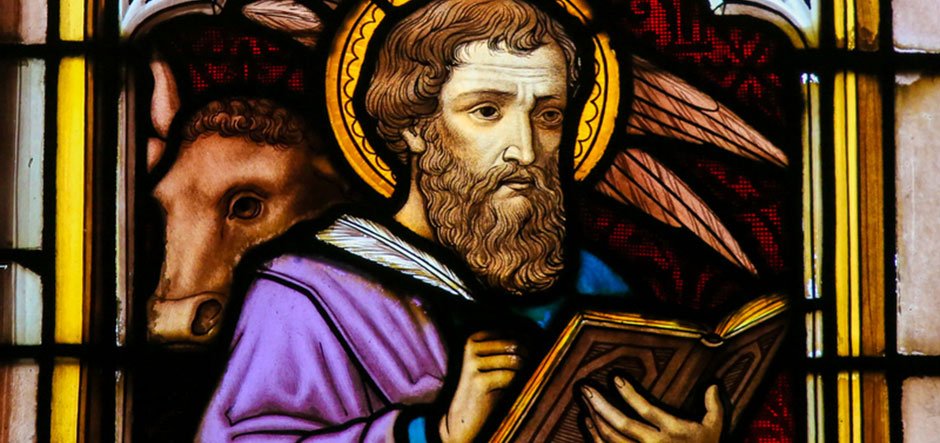
Richard Bauckham writes:This is the text of a sermon I preached originally in Christ Church, Chelsea, in club to introduce the congregation to the Gospel of Luke near the outset of a year C in the Lectionary (year of Luke).
There is one divergence between the Gospels that anyone tin can see quite easily without even reading very much of them: each of them starts in a quite dissimilar way. Y'all tin tell quite a lot about a Gospel past thinking a bit about how information technology begins. In Luke'due south case, the Gospel starts with a dedication and a preface. That immediately makes it look a lot more similar a work of Greek literature than the other Gospels do. And that, I'm sure, was Luke's intention. He'south a man who knows, not merely Jewish literature, simply the wider cultural earth of his day, and he wants to place his piece of work on a higher literary level than, say, Marker's Gospel. Of the four Gospel writers, Luke writes much the most accomplished Greek. He dedicates his work to a human chosen Theophilus, evidently a homo of some social importance, and probably his idea is that Theophilus volition not just read information technology himself, but promote information technology. Theophilus would probably hold a book launch: he would invite some of his friends to dinner and give the Gospel a get-go reading.
History and eyewitness
Luke's preface is the sort of preface a historian in Luke's day would have written. It talks about his sources and how he went about using them. Like other ancient historians, the sources he really valued were eyewitnesses: those, he says, who were 'eyewitnesses from the get-go', people who had been disciples of Jesus from early on in his ministry building. He claims to take investigated everything carefully – which suggests he may take actually interviewed disciples of Jesus – and he compiled his sources into what he calls an 'orderly business relationship' of the events. This is what a practiced historian was supposed to do.
So he was conspicuously not a disciple of Jesus himself, but someone who had skillful admission to eyewitness sources. Traditionally he has been identified with the Luke who was a companion of Paul and I recollect at that place's a lot to be said for that view. It would mean he would have travelled around the eastern Mediterranean with Paul, spent quite a lot of fourth dimension in Jerusalem, and accompanied Paul to Rome, at a time when lots of people who had known Jesus were around. If Luke was already planning to write a Gospel he would have had a lot of opportunities to gather fabric. He did use at least one, very important written source, which was Mark's Gospel. Whenever you detect that Luke tells a story yous can likewise read in Marker, that's because he got information technology from Marking, though he has oftentimes abbreviated Mark's version and rewritten information technology a chip. About a third of Luke'south content has come from Mark.
Framework and sources
Luke, I'm sure, knew that Marker's Gospel embodied Peter'south accounts of Jesus and he would have valued it highly for that reason. Just Mark's Gospel was also specially useful to Luke for some other reason. Information technology was probably the simply source from which he could get an overall narrative framework, a consecutive story running from the preaching of John the Baptist through the class of Jesus' ministry up to his death and and so his resurrection. His other sources gave him parables of Jesus, other sayings of Jesus, stories virtually Jesus, quite probably a passion narrative, but they didn't give him a connected story. And so what Luke has done is: he'south taken over Mark's narrative equally an overall framework for his Gospel story and placed the rest of his material, lxx% of his Gospel, at appropriate places in Marker's narrative framework.
Where did the rest of Luke's material come from? I doubtable it came from a number of different sources (not just 2, as a lot of scholars suggest). These may well take included some of the women disciples of Jesus; Luke is the simply Gospel writer to go far clear that Jesus had women disciples who travelled around with him all the time and 2 of those he names are only in Luke. In general what Luke is trying to do is to write a much more comprehensive Gospel than Marking'southward, a considerably longer work than Mark's, cartoon together fabric from written and oral sources, and peculiarly including a whole lot more than of Jesus' teaching than Mark had done.
So, for case, it's to Luke that nosotros owe many of the most memorable parables of Jesus: the Prodigal Son is only in Luke'southward Gospel, the Practiced Samaritan is only in Luke, the Pharisee and the Tax-collector is only in Luke, the Rich Man and Lazarus is only in Luke, the Rich Fool is but in Luke, and there are quite a few others.
God is visiting his (Jewish) people
I've said that Luke presented his work equally history and went near it in the way that historians of his time would have done, but of course it is very special history: it's Gospel. It'southward the story (to put it in a Lukan way) of how God visited his people Israel, fulfilling what the prophets had hoped for, providing for them a Saviour who was also the Saviour for all the nations. People have ofttimes thought of Luke's Gospel as a Gentile Gospel, in contrast to, say, Matthew's much more Jewish Gospel. Information technology's probably truthful that Luke is the only major New Testament author who was not himself Jewish. But if Luke was not born Jewish, he had certainly immersed himself securely in the Hebrew Bible and the traditions of Judaism.
His story starts in the Temple in Jerusalem and the story he tells in the Gospel too ends in the Temple in Jerusalem, though of class, in his second book, the Acts, he tells how early Christianity spread from Jerusalem to the rest of the Roman globe. In Luke'south story of Jesus he makes it very clear that Jesus lives out the program of God for him that God had already gear up out in the Jewish scriptures. The continuity of Jesus with the One-time Testament is very important for Luke, but of form that is not at all in contradiction to the fact that Luke's Gospel, his good news, is for non-Jews as well every bit for Jews, because that is what the prophets of Israel themselves had expected. As aged Simeon, who'southward been waiting all his life for the Messiah to come, says when Joseph and Mary bring Jesus to the Temple: Jesus is 'a calorie-free for revelation to the Gentiles and for glory to your people Israel.'
Cast of characters
Something people don't often discover about Luke is this: he has an enormous cast of characters. There are over a hundred individuals who appear in Luke's Gospel – and I'm not counting indefinite groups of people like 'some Pharisees' or 'the principal priests' or 'all the taxation collectors' and I'g not counting the 70 disciples of Jesus who announced as a group but in Luke. None of the other Gospels have as many characters as Luke. In Luke Jesus is always surrounded past crowds of disciples (far more than than just the Twelve) and crowds of people who come for healing or to hear him. Only he'due south besides constantly coming together individuals: he heals them or they get his disciples or they ask him questions or requite him hospitality or go his enemies.
They include top people like the Herods (it's only in Luke that Jesus actually meets Herod the tetrarch), the loftier priests, aristocrats like Joanna, Pharisees (not all of them hostile), and Roman centurions. The crowds and Jesus' disciples are mostly of the mutual people: farmers and fishermen. But disproportionately numerous amidst the individuals who run across Jesus are two sorts of people who would never effigy at all in stories that were not nearly Jesus. Ane of these categories are the people the Gospels call 'the poor' – which doesn't mean ordinary people living at subsistence level; it means the destitute, people with no secure means of support. Disabled people usually had to live by begging. Widows ofttimes had few means of support. And also as the poor there were the outcasts: people excluded from guild, like the lepers and the demon-possessed, people who were regarded as notorious sinners, like the taxcollectors and the prostitutes, and people despised past the Jews, like Samaritans.
Proficient news for the poor
So Luke's Jesus mixes with everybody, right across the social world of his 24-hour interval, women as well every bit men, simply he seems to get out of his manner to accomplish out to those who were left aside, who for one reason or some other found themselves on the margins of social club, and even in many cases were excluded from the presence of God in the Temple. This is the case in all the Gospels, merely it's especially clear in Luke, and that's partly because Luke draws attention to information technology at the kickoff of his account of Jesus's ministry (Luke 4:16-20). Jesus goes dorsum to the synagogue in Nazareth, and it's only Luke who makes this the first story he tells about Jesus'due south ministry building. For Luke this is programmatic for what Jesus is about in his ministry. He reads from the prophet Isaiah:
the Spirit of the Lord has anointed me
(that ways: God has appointed me equally the Messiah)
to bring expert news (Gospel) to the poor.
He has sent me to bring release to the captives
and recovery of sight to the blind,
and to let the oppressed go free,
to proclaim the year of the Lord'due south favour.
Jesus reads that passage, and he says: "This is being fulfilled now before you as I speak. That's what I'm doing, that's my mission."
And so Jesus's Gospel, Luke's Gospel is good news for the poor and the outcasts. Information technology's good news for everyone, of course, but it's only skilful news for anybody else if they really have on board that it's skilful news for the poor and the outcasts. Pharisees who complain that Jesus mixes with revenue enhancement-collectors and sinners cannot hear the good news for themselves until they hear information technology for tax-collectors and sinners.
The gospel of joy
Finally, at that place's something else that Luke makes a special bespeak of saying nigh the Gospel. Y'all'll remember it, I'thousand sure, because it's in Luke's Christmas story. When the affections announces the birth of Jesus to the shepherds, he says: "I am bringing y'all good news (Gospel) of great joy for all the people." There is more joy in Luke'southward Gospel than in whatever of the others. The Gospel brings joy especially considering, to put it in a way that Luke is very fond of, the Son of man came to seek and to save the lost. Luke has that gear up of 3 lovely parables near the finding of the lost: the shepherd who goes in search of the lost sheep, the woman who searches for her lost money, and the father whose lost son returns. In each instance the story ends with a party. The shepherd asks everyone to come and rejoice with him. So does the woman when she finds her coin. And the father says they must celebrate and rejoice, considering the son he had lost has been found.
All that joy in the parables represents, says Jesus, not simply joy on earth but joy in sky. God and his angels rejoice more over one sinner who repents than over ninety-nine who do non need to apologize. There's also a lot of hurting in Luke's Gospel: not only must Jesus die just his disciples, he tells them, take to take upwards their cantankerous daily and follow him on his fashion to the cantankerous. I haven't time to take up that theme. Merely in the end, across the pain, information technology's a Gospel of joy. Luke's last sentence portrays the disciples after Jesus has ascended to heaven: they 'returned to Jerusalem with cracking joy and they were continually in the Temple blessing God.'
 Richard Bauckham is a biblical scholar and theologian. He is Emeritus Professor of New Attestation Studies at St Andrews University, Scotland, but now lives in Cambridge. His latest volume is Who is God?
Equally we approach Advent, how practise we make sense of the language in the New Testament almost the 'end of the world'? Why is information technology pastorally of import to go this correct? Is all the language most 'rapture', 'tribulation' and 'millennium' helpful—or a distracting fiction?
Come and find out at Ian Paul'due south Zoom teaching forenoon on Sat fourth Dec:
https://www.eventbrite.com/eastward/making-sense-of-the-stop-of-the-world-tickets-207768409907
If you enjoyed this, do share it on social media (Facebook or Twitter) using the buttons on the left. Follow me on Twitter @psephizo. Similar my page on Facebook.
Much of my work is done on a freelance ground. If y'all take valued this post, you can make a unmarried or repeat donation through PayPal:
Comments policy: Good comments that appoint with the content of the post, and share in respectful fence, tin can add together real value. Seek first to understand, then to be understood. Brand the most charitable construal of the views of others and seek to learn from their perspectives. Don't view debate as a disharmonize to win; address the argument rather than tackling the person.
feldmanwoundescous.blogspot.com
Source: https://www.psephizo.com/biblical-studies/what-is-distinctive-about-lukes-gospel/
0 Response to "What is distinctive about Luke’s gospel?"
Post a Comment